
Videos We’ve Found Helpful
Planning Your Legacy
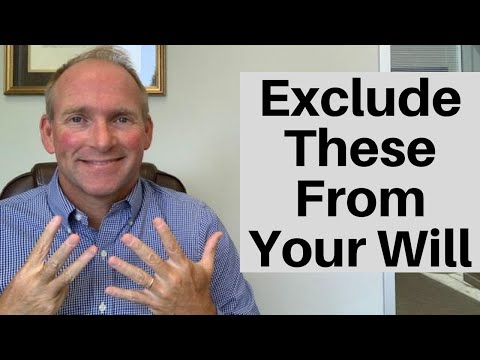
This estate attorney walks you through the 8 things to not include in your will.
Sometimes people put provisions in their last will and testament when they should not have. While sometimes we see inappropriate provisions in wills that attorneys prepare, most of the time these mistakes are made by people who handwrite their own will in a state that permits people to write a valid handwritten will. Some of the things that get written in wills, that shouldn't, include funeral arrangements, organ donation, IRA bequests, life-support machine decisions, bequests of assets in trust, bequests of assets held in a company, or long explanations of reasons why a bequest is being made. This post is for informational purposes only and does not provide legal advice. Please do not act or refrain from acting based on anything you read on this site. Using this site or communicating with Rabalais Estate Planning, LLC, through this site does not form an attorney/client relationship. Paul Rabalais Estate Planning Attorney
Caring for a Loved One
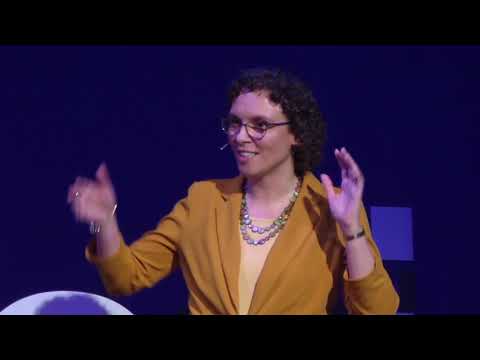
Diane Thomas brings compassion and gentle humor to the moment a friend says “I have cancer.” Drawing from experience as a survivor, Thomas details strategies you can utilize to support your friend and the things you can say or do that will help you not only mean well, but do well.
In this insightful talk, recorded at TEDxEustis 2020, Diane Thomas brings compassion and gentle humor to the moment a friend says “I have cancer.” Drawing from experience as a survivor, Thomas details strategies you can utilize to support your friend and the things you can say or do that will help you not only mean well, but do well. Diane Thomas holds two research degrees, and has nearly a decade's experience in both the mortgage industry and in human resources reporting and analytics. Since becoming a financial advisor several years ago, she has been able to combine her two great loves, research and math, with a lifelong commitment to service. She finds deep satisfaction in working with individuals to help them understand the unique pieces of their goals and how they fit together into a coherent whole. Having encountered various personal challenges along the way, Diane is passionate about leveraging experience to positively impact the next conversation and the people with whom she comes in contact. Her husband of 16 years has the near-impossible task of preventing her from volunteering too often, and tolerates her continuous "Have you ever wondered..." questions. Their energetic daughter keeps them both tired and amused, and is the light of their lives. Diane Thomas holds two research degrees, and has nearly a decade's experience in both the mortgage industry and in human resources reporting and analytics. Since becoming a financial advisor several years ago, she has been able to combine her two great loves, research and math, with a lifelong commitment to service. She finds deep satisfaction in working with individuals to help them understand the unique pieces of their goals and how they fit together into a coherent whole. Having encountered various personal challenges along the way, Diane is passionate about leveraging experience to positively impact the next conversation and the people with whom she comes in contact. Her husband of 16 years has the near-impossible task of preventing her from volunteering too often, and tolerates her continuous "Have you ever wondered..." questions. Their energetic daughter keeps them both tired and amused, and is the light of their lives. This talk was given at a TEDx event using the TED conference format but independently organized by a local community. Learn more at https://www.ted.com/tedx

Many caregivers experience guilt when caring for someone. In this video, I explain where guilt comes from and what you can do to work through those difficult feelings.
Many caregivers experience guilt when caring for someone with Alzheimer’s disease, lewy body dementia, or frontotemporal dementia. In this video, I explain where guilt comes from and what you can do to work through those difficult feelings. Learn more about dementia and connect with amazing Careblazers through our Care Collective: https://careblazers.com/for-families/ FREE Resource: 📺 Get Access to A FREE Dementia Caregiver Training on How to Care For a Loved One With Dementia- WITHOUT The Overwhelm, Dread, and Confusion: ➡︎ https://www.dementiacareclass.com/yt 🎁 Download your FREE Dementia Careblazer Survival Guide, downloaded over 100,000 times worldwide: https://go.careblazers.com/survivalguide
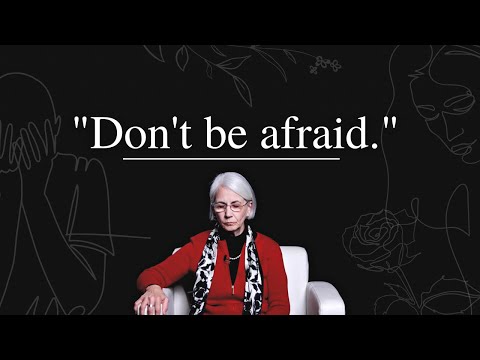
Dr. Margaret Cottle, a hospice and palliative care doctor, advises on what to say to someone who is dying.
Dr. Cottle is trained in a particular form of end-of-life care, Dignity Therapy. Dignity Therapy is specifically designed to value and support those facing the end of their life. Among Dr. Cottle's advice for interacting with those approaching the end of life, she suggests: 1. Don't be afraid to talk to those facing death and the end of life. This is a beautiful chance to be, "God with skin on" for those facing difficult circumstances. 2. Ask questions about their life. What they enjoyed most in life? What they want their family to remember about them? 3. Remind them that, as Christians, "We have this hope as an anchor for our souls..." - Hebrews 6:19a. 4. If you're the one approaching death or the end of life, allow others to care for you.
For Friends & Family of a Sick Loved One
Diane Thomas brings compassion and gentle humor to the moment a friend says “I have cancer.” Drawing from experience as a survivor, Thomas details strategies you can utilize to support your friend and the things you can say or do that will help you not only mean well, but do well.
In this insightful talk, recorded at TEDxEustis 2020, Diane Thomas brings compassion and gentle humor to the moment a friend says “I have cancer.” Drawing from experience as a survivor, Thomas details strategies you can utilize to support your friend and the things you can say or do that will help you not only mean well, but do well. Diane Thomas holds two research degrees, and has nearly a decade's experience in both the mortgage industry and in human resources reporting and analytics. Since becoming a financial advisor several years ago, she has been able to combine her two great loves, research and math, with a lifelong commitment to service. She finds deep satisfaction in working with individuals to help them understand the unique pieces of their goals and how they fit together into a coherent whole. Having encountered various personal challenges along the way, Diane is passionate about leveraging experience to positively impact the next conversation and the people with whom she comes in contact. Her husband of 16 years has the near-impossible task of preventing her from volunteering too often, and tolerates her continuous "Have you ever wondered..." questions. Their energetic daughter keeps them both tired and amused, and is the light of their lives. Diane Thomas holds two research degrees, and has nearly a decade's experience in both the mortgage industry and in human resources reporting and analytics. Since becoming a financial advisor several years ago, she has been able to combine her two great loves, research and math, with a lifelong commitment to service. She finds deep satisfaction in working with individuals to help them understand the unique pieces of their goals and how they fit together into a coherent whole. Having encountered various personal challenges along the way, Diane is passionate about leveraging experience to positively impact the next conversation and the people with whom she comes in contact. Her husband of 16 years has the near-impossible task of preventing her from volunteering too often, and tolerates her continuous "Have you ever wondered..." questions. Their energetic daughter keeps them both tired and amused, and is the light of their lives. This talk was given at a TEDx event using the TED conference format but independently organized by a local community. Learn more at https://www.ted.com/tedx
For Those Facing Their Departure

What’s the difference between a living will and a last will and testament?
Many people confuse the terms, "Will," "Last Will," "Living Will," and "Living Trust." It's easy to confuse them because they look and sound alike. A living will is the legal document that you can use to state your wishes regarding whether you want medical procedures withheld or withdrawn if you are in a terminal and irreversible condition. A last will, also referred to as a will or last will and testament, is the legal document that you use to leave specific assets or your entire estate to certain people, designate your executor, and name guardians for minor children.

Death is unavoidable but talking about it, preparing for it doesn't have to be taboo or frightening. Palliative care and hospice physician Monisha Pujari has helped countless terminally ill patients transition out of life with dignity.
Death is unavoidable but talking about it, preparing for it doesn't have to be taboo or frightening. Palliative care and hospice physician Monisha Pujari has helped countless terminally ill patients transition out of life with dignity. In this thoughtfully tender talk, she offers stories that reframe how we think about life, love and reconciliation. Dr. Monisha Pujari believes that striving to die well is an extension of striving to live well and she has dedicated her life to helping patients proactively manage their decline. With more than a decade of experience as a palliative and hospice care physician, Monisha is known among her peers for her novel approach that offers terminal patients the option of hospice care in the home setting. She currently serves as Longleaf Hospice’s medical director. Monisha is board certified in hospice and palliative care in addition to holding a Hospice Medical Director certification. She received her internal medicine training at the Mayo Clinic. This talk was given at a TEDx event using the TED conference format but independently organized by a local community. Learn more at https://www.ted.com/tedx
Dr. Margaret Cottle, a hospice and palliative care doctor, advises on what to say to someone who is dying.
Dr. Cottle is trained in a particular form of end-of-life care, Dignity Therapy. Dignity Therapy is specifically designed to value and support those facing the end of their life. Among Dr. Cottle's advice for interacting with those approaching the end of life, she suggests: 1. Don't be afraid to talk to those facing death and the end of life. This is a beautiful chance to be, "God with skin on" for those facing difficult circumstances. 2. Ask questions about their life. What they enjoyed most in life? What they want their family to remember about them? 3. Remind them that, as Christians, "We have this hope as an anchor for our souls..." - Hebrews 6:19a. 4. If you're the one approaching death or the end of life, allow others to care for you.
Navigating Grief & Loss
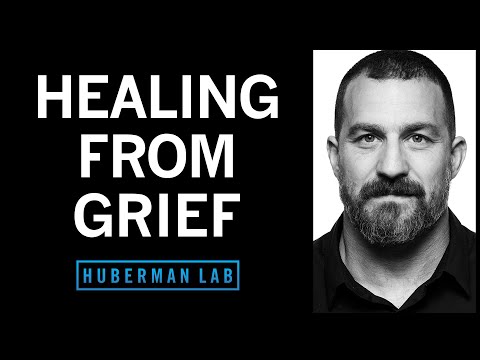
Dr. Huberman discusses grief and the challenges of processing losses of different kinds.
This episode, I discuss grief and the challenges of processing losses of different kinds. I explain the biological mechanisms of grief, including how neural circuits for emotional and factual memory combine with those for love and attachment, to create feelings of absence and yearning. I discuss how grief is distinct from depression, yet why they can feel so similar. I also provide science-based tools to assist with the grieving process, including how to reframe and remap the relationship with those we have lost while still maintaining a strong emotional connection to them. I also explain the importance of having and building strong foundational psychological and biological states so that we can better cope with grief when it happens. Finally, I describe tools to adjust those states, including those for accessing sleep, managing stress and emotional swings. This episode is for those suffering from grief but also for everyone, given that we all experience grief at some point in our lives. We recorded this episode before the recent mass shooting tragedies in the United States. While we hope the information in this episode will be of use to anyone suffering from grief of any kind and at any time, we are also careful to acknowledge that many people require additional support and resources. For that reason, we include mention of such resources and we generally hope people will access them if needed.
Browse All Videos
Help Us Help Someone
Have you found videos that were helpful to you as you navigated one of these areas: planning for your legacy, taking care of a loved one, caregiver TLC, supporting a friend or family member going through a difficult medical situation, facing your own mortality, or navigating loss and grief? Please share them with us!
What’s the difference between a living will and a last will and testament?
Many people confuse the terms, "Will," "Last Will," "Living Will," and "Living Trust." It's easy to confuse them because they look and sound alike. A living will is the legal document that you can use to state your wishes regarding whether you want medical procedures withheld or withdrawn if you are in a terminal and irreversible condition. A last will, also referred to as a will or last will and testament, is the legal document that you use to leave specific assets or your entire estate to certain people, designate your executor, and name guardians for minor children.